
The Offer Change Rollout Checklist: How Online Coaches Update DMs, Ads, and Team Handoffs Without Chaos
A practical offer change rollout checklist for online coaches updating pricing, promises, bonuses, DM scripts, ads, setters, onboarding, and delivery without losing context.

Changing your coaching offer sounds simple when it is still in your head.
"We are raising the price."
"We are adding a premium tier."
"We are removing Voxer."
"We are changing the guarantee."
"We are tightening who qualifies."
Then Monday hits, and the old offer is still everywhere.
Your setter is using last month's script. Your saved replies mention the old bonus. Your ad says one thing, your application says another, and your onboarding message still promises a support level you quietly removed two weeks ago.
That is how offer changes get messy. Not because the offer was wrong. Because the rollout was incomplete.
This post is for online coaches who already have real DM volume, moving pieces, maybe a VA or setter, maybe ads, maybe ManyChat, maybe a CRM, and enough momentum that a small change can create a lot of confusion if it is not rolled out cleanly.
The offer is not just the sales page
Most coaches think their offer lives on a sales page, a checkout link, or a pinned post.
It does not.
Your offer lives anywhere a lead or client learns what they get, what it costs, who it is for, what happens next, and what they can expect from you.
That means your offer may live in:
- Instagram bio and highlights
- pinned posts and story CTAs
- DM scripts and saved replies
- ManyChat flows and keyword automations
- DM ad copy and creative
- application forms
- calendar descriptions
- sales call notes
- setter training docs
- payment links and invoices
- onboarding emails
- welcome messages
- client agreements
- delivery resources
- team memory
That last one is the sneaky one.
If the offer changed in your head but not in the team's workflow, the old offer is still alive. It will keep showing up in conversations until you remove it.
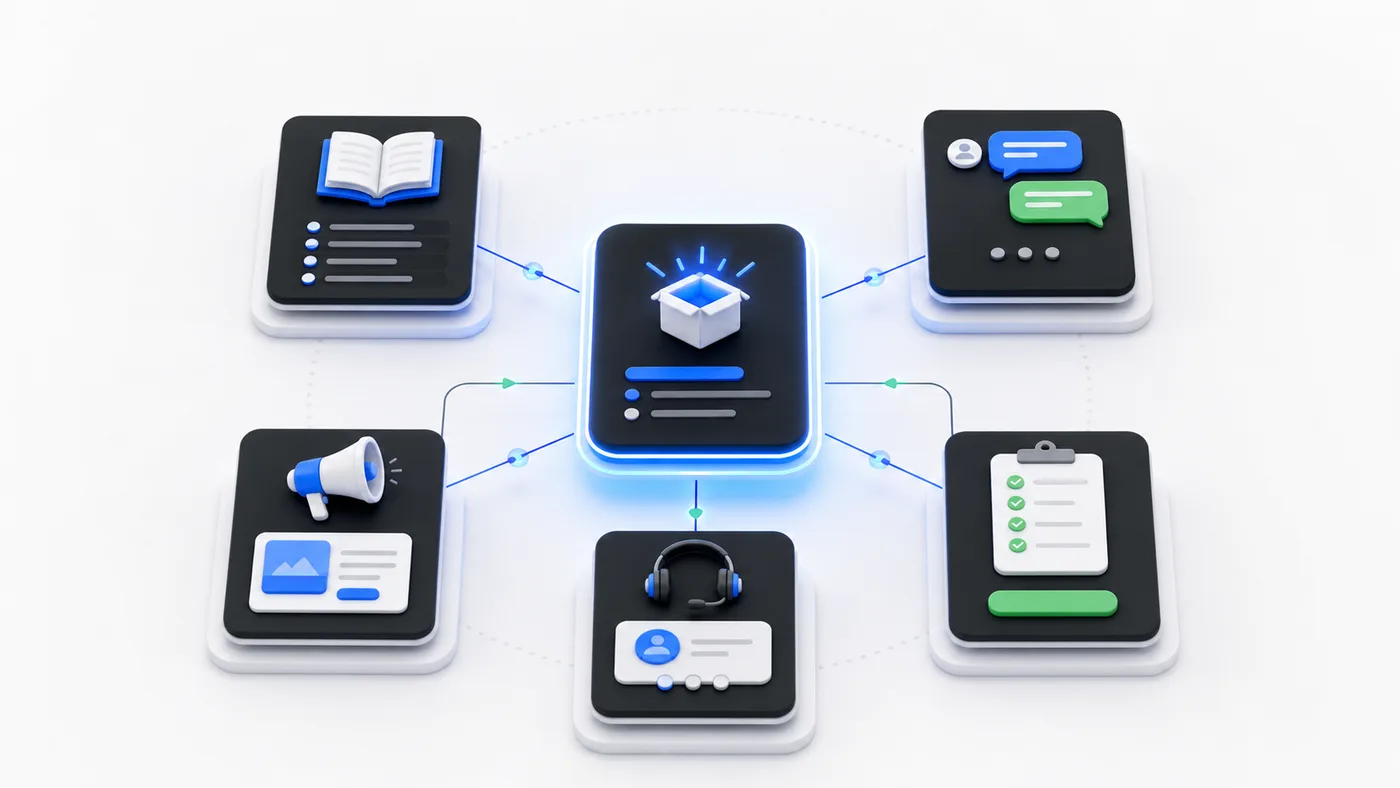
As the map above shows, the cleanest offer updates start from one source of truth. Every other surface should pull from that, not from memory, old scripts, or whatever someone remembers from last week's call.
Why offer changes break growing coaching businesses
Offer changes are normal. They are often healthy.
You might change the offer because:
- your delivery has improved
- your price no longer matches the support level
- your clients need a different container
- your sales calls reveal a better promise
- your audience has shifted
- your capacity is tighter
- your team needs clearer qualification rules
- your old bonuses are no longer relevant
None of that is bad. The problem is that growing coaching businesses are full of partial systems.
One place has the current price. Another has the old price.
One setter knows the new qualification rule. Another still books weak-fit calls.
One ad talks about the new angle. The DM reply after the ad uses the old opener.
One client gets the updated onboarding path. Another gets last month's welcome message.
This is where confusion becomes expensive. Leads feel mixed signals. Team members ask the same questions repeatedly. You spend the week correcting people instead of testing the new offer.
HubSpot's product launch checklist makes a useful general point here: launches involve customer understanding, positioning, marketing materials, distribution channels, team preparation, and post-launch review. A coaching offer change is smaller than a SaaS product launch, but the same idea applies. If the message and the team are not aligned, the market feels it.
The 7 places your offer must be updated
For a coaching business, do not start with "update the website."
Start with the actual path a buyer takes.
| Surface | What to check |
|---|---|
| Source of truth | Current offer, price, bonuses, terms, start date |
| DM system | Saved replies, scripts, qualification, follow-up, booking language |
| Marketing | Posts, stories, lead magnets, CTAs, emails, ads |
| Sales calls | Call notes, application questions, objections, payment options |
| Team handoffs | Setter notes, VA instructions, escalation rules, ownership |
| Payment | Links, invoices, payment plans, receipts, confirmation pages |
| Onboarding and delivery | Welcome message, intake, expectations, support rules, resources |
You do not need to update everything in the same hour.
You do need to know what needs updating before the new offer is live.
This is where the coaching tech stack audit becomes useful. If you do not know where the offer lives, your stack is not just messy. It is actively making change harder.
Step 1: write the current offer in one place
Before touching scripts, ads, or pages, write the offer in one central doc.
Call it whatever you want:
- offer card
- offer source of truth
- current offer doc
- sales reference sheet
- team offer brief
The name matters less than the function.
It should answer:
| Field | Example prompt |
|---|---|
| Who it is for | Who is this version best suited for? |
| Who it is not for | Who should we disqualify faster now? |
| Core promise | What outcome or transformation are we selling? |
| Price | What is the current price and when does it apply? |
| Payment options | Pay-in-full, payment plan, deposit, financing |
| Support level | What access, calls, chat, reviews, or feedback are included? |
| Bonuses | What is included and what was removed? |
| Timeline | How long is the program or container? |
| Start date | When does this version become active? |
| Legacy rule | What happens to current clients or old leads? |
| Qualification rule | What must be true before someone gets the call link? |
This doc is not for show.
It is the thing every other update references.
If someone asks, "Which version are we selling now?" the answer should not be "check with me." It should be in the offer card.
Step 2: update the DM path first
For Intellicoach's audience, the DM path usually matters more than the sales page.
If most serious leads start in Instagram DMs, the offer update has to show up there first.
Review:
- first reply to offer inquiries
- qualification questions
- price response
- "what is included?" response
- booking handoff
- follow-up after "I need to think"
- follow-up after no response
- saved replies
- team notes
- AI or automation instructions
- escalation rules
This is where a lot of coaches accidentally create friction.
The lead asks about the new program. The reply references the old one. The lead asks about price. The answer says "depends" because the team is not sure which rule applies. The lead books a call, but the call notes do not say whether they were sold on the new promise or old promise.
That is not a copywriting problem. It is a rollout problem.
If you are already dealing with messy handoffs, read Do You Need a CRM for Instagram DMs?. A CRM can store information, but the offer still has to be current inside the conversation where the buyer is deciding.
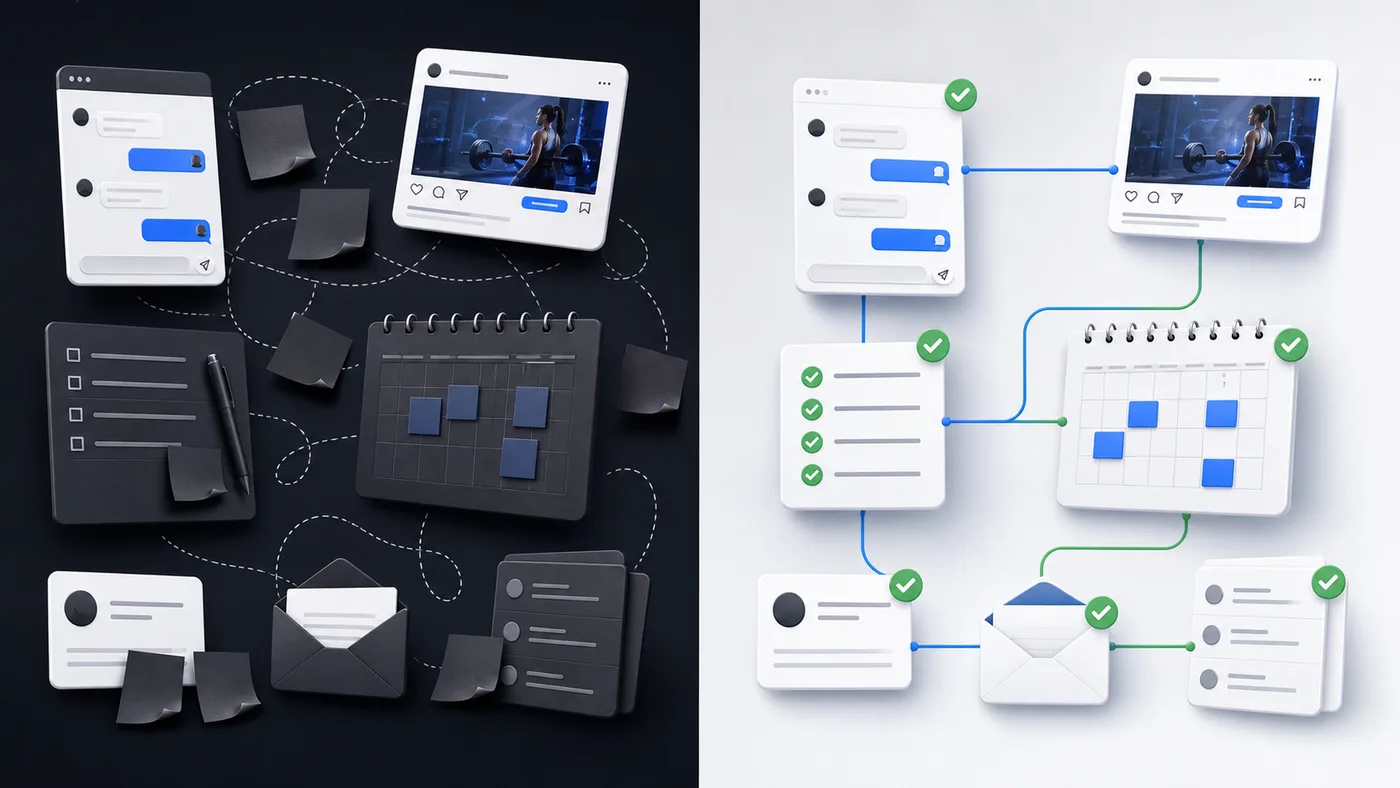
The left side of this visual is what most offer changes feel like: old notes, half-updated scripts, and disconnected surfaces. The right side is the goal: one clean path from message to call to onboarding.
Step 3: update ads without panic-editing everything
If you are running DM ads, follower ads, retargeting, or any campaign that points people toward the old offer, slow down before changing every active ad.
The question is not only "Is this copy current?"
The question is:
What is the least disruptive way to test the new offer angle?
Meta's delivery-status documentation notes that significant edits can push ads or ad sets back into a preparing or learning state. In normal coach language: if an ad is already working, heavy edits can make performance harder to read for a while.
That does not mean you should never update ads.
It means you should separate urgent mismatches from strategic tests.
Use three buckets:
| Bucket | What to do |
|---|---|
| Incorrect or misleading | Fix immediately |
| Accurate but old angle | Leave if still true, test new angle separately |
| New offer test | Create a controlled new test so data stays readable |
If the ad says something that is no longer true, fix it. If the ad still tells the truth but uses the old angle, you may not need to tear it apart mid-flight. You can build a new test instead.
For coaches running smaller budgets, this matters because you need clean learning. If everything changes at once - offer, price, ad angle, DM reply, qualification, and follow-up - you will not know what worked.
This pairs naturally with the $50/day DM ad test framework, because a changed offer deserves a contained test before you scale spend behind it.
Step 4: update sales calls and handoffs
The sales call is where offer confusion becomes obvious.
You will feel it when:
- the lead expects one version of support
- the setter notes mention a removed bonus
- the application uses the old qualification question
- the call starts with you clarifying what the offer actually is
- the lead says, "Wait, I thought it included..."
- the close feels harder because the promise is fuzzy
The fix is not to "wing it better."
Update the call prep.
Your sales call notes should include:
- lead source
- which offer version they responded to
- what they think is included
- what problem they want solved
- which qualification rule they passed
- current price discussed, if any
- payment option discussed, if any
- objections already surfaced
- next step promised
If you use a setter, this is non-negotiable. The setter cannot hand you a lead from the old offer context and expect you to close the new offer cleanly.
If setter handoffs are already fuzzy, revisit The Setter Scorecard. Offer changes are one of the fastest ways to reveal whether your setter is creating clarity or just creating calendar events.
Step 5: update onboarding before the first new client pays
Do not wait until the first buyer of the new offer pays to fix onboarding.
That is how coaches end up sending old welcome messages for new promises.
Check:
- payment confirmation
- welcome message
- intake form
- client agreement
- access instructions
- first coaching step
- support expectations
- call cadence
- resource links
- internal notes from the sale
If you removed a bonus, remove it from onboarding.
If you added a support layer, make sure the client knows how to use it.
If the new offer has a different first milestone, update the first-week instructions.
If the new price comes with a more premium experience, the first 72 hours need to feel like it.
For the deeper version of this, use The First 72 Hours After a Coaching Client Pays. Offer rollout is not finished when the lead buys. It is finished when the buyer enters the right client experience.
Step 6: brief the team in plain language
Do not send your VA or setter a giant doc and call that a rollout.
Give them a plain-language brief:
- What changed?
- Why did it change?
- Who is this now for?
- Who is this no longer for?
- What should we say differently in DMs?
- What should we stop saying?
- What gets escalated to me?
- What happens to old leads?
- What happens to current clients?
- Where is the source of truth?
This does not need to be fancy.
It needs to be usable.
The more your team has to infer, the more they will default to the old way.
That is why SOPs matter here. The best next step is not a 19-page manual. It is one clean update inside the workflow. If your team asks the same rollout questions twice, turn the answer into a small SOP using The Coaching Business SOP That Actually Gets Used.
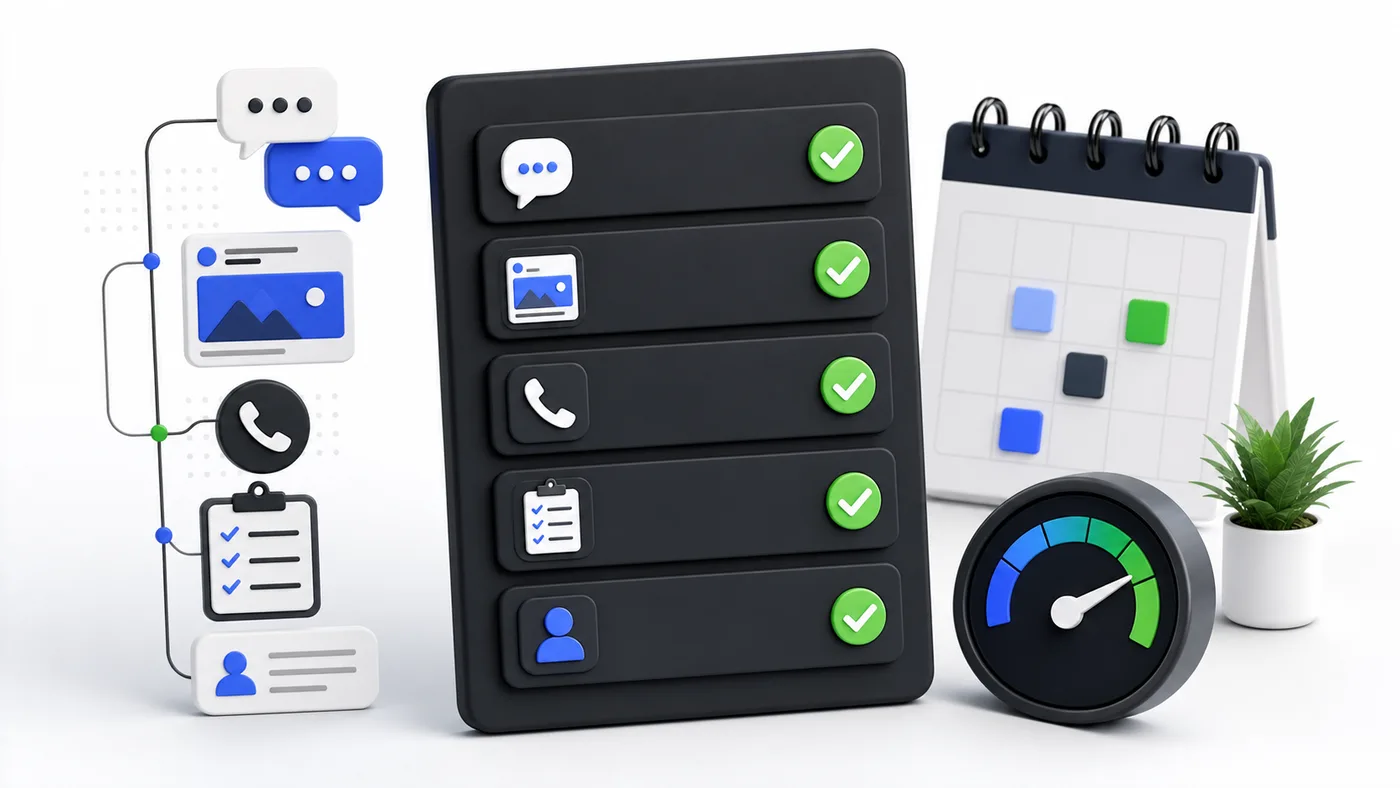
Use the checklist above as a visual reminder: the rollout is not one update. It is a chain. If one link is old, the buyer feels it.
The 48-hour offer change rollout checklist
For a simple offer update, use this 48-hour version.
Hour 1: lock the offer card
- current price
- payment options
- promise
- support level
- bonuses
- who qualifies
- who does not qualify
- start date
- old-lead rule
- current-client rule
Hours 2-4: update sales language
- DM scripts
- saved replies
- price answer
- "what is included?" answer
- booking handoff
- follow-up language
- setter notes
- escalation rules
Hours 5-8: update marketing surfaces
- Instagram bio, if needed
- highlights
- pinned posts
- story CTAs
- ManyChat keywords
- lead magnet follow-up
- email sequence
- ad copy
- landing page
Day 2: update the back end
- application form
- calendar description
- sales call prep
- payment links
- onboarding message
- intake form
- welcome resource
- internal client notes
- delivery expectations
Final check: search for the old version
Search for:
- old price
- old bonus name
- old program name
- old support promise
- old call cadence
- old payment plan
- old guarantee
- old qualification language
The old version should either be removed, archived, or clearly labeled as legacy.
How to handle old leads
Old leads are where coaches get awkward.
Someone asked about the old offer two weeks ago. Now the offer changed.
What do you say?
Keep it simple:
"Quick update - we tightened the program since we last talked, so the current version is a little different. The main change is [simple change]. Based on what you shared, I still think the right next step is [next step], but I want to make sure you have the current version before you decide."
No over-explaining.
No apologizing for improving the offer.
No pretending nothing changed.
If the price changed, be clear.
If the support changed, be clear.
If the qualification rule changed and they are no longer a fit, be honest.
Confusion creates more resistance than the change itself.
How to handle current clients
If current clients are affected, communicate directly.
Do not let clients learn about an offer change through a public post if it changes their experience, renewal, support level, or future pricing.
Clarify:
- what changes for new clients
- what changes for current clients
- what stays the same
- when the change applies
- what happens at renewal
- who they should ask if they are unsure
If current clients are not affected, you may still want to tell them in simple language:
"You may see us talking about the program a little differently publicly. Nothing changes for your current agreement. We updated the positioning for new inquiries so the right people understand the offer more clearly."
That keeps trust clean.
The rollout review after 7 days
Do not judge the offer change from one weird sales call.
Review it after seven days.
Ask:
- Are leads using the new language back to us?
- Are DMs clearer or more confusing?
- Are better-fit people booking?
- Are weak-fit leads being filtered earlier?
- Are objections different?
- Are setters or VAs asking fewer questions?
- Are calls starting with better context?
- Is onboarding matching what was sold?
- Did any old offer language show up?
This is where offer changes become useful data instead of just a rebrand.
If lead quality changes, connect it to Lead Source Tracking for Online Coaches. Sometimes the new offer is fine, but the source bringing leads into the conversation has changed. You need to know the difference.
What not to do
Do not announce the change publicly before the team knows what changed.
Do not update ads before DM replies are ready.
Do not change payment links without checking onboarding.
Do not let old saved replies live in the inbox.
Do not assume your setter understands the new qualification rule because you said it once.
Do not keep selling the old version accidentally because the new one feels uncomfortable.
Do not turn every offer change into a full business crisis.
Most rollout issues are not dramatic. They are small mismatches repeated across too many places.
The real goal: one version of the truth
A clean offer rollout does not mean every sentence is perfect.
It means your business has one version of the truth.
The DM reply matches the ad.
The setter notes match the current qualification rule.
The call handoff matches what the lead saw.
The payment link matches the price.
The onboarding matches the promise.
The delivery matches what was sold.
That is what creates control as you grow.
When coaches say, "I want systems, not more people," this is part of what they mean. They do not want every change to require a week of fixing scattered details. They want a business where important updates move through the system cleanly.
CTA: Before your next price change, new tier, bonus update, or offer repositioning, run the rollout checklist. If the hardest part is keeping Instagram DM scripts, lead stages, follow-ups, and handoff context aligned, see how Intellicoach helps online coaches keep the front end of the business organized as the offer evolves.
Frequently asked questions
What is an offer change rollout for online coaches?
An offer change rollout is the process of updating every place your coaching offer shows up: pricing, promise, bonuses, qualification rules, DM scripts, ads, sales call notes, payment links, onboarding, delivery expectations, and team handoffs.
When should a coach use an offer change checklist?
Use an offer change checklist before raising prices, changing your coaching promise, adding or removing bonuses, launching a new tier, shifting from group to hybrid support, changing qualification rules, or updating your sales process.
Why do offer changes create confusion in DMs?
Offer changes create confusion in DMs because the old version of the offer often still lives in saved replies, setter scripts, ManyChat flows, ad copy, landing pages, old call notes, and team memory. If one surface is updated and another is not, leads get mixed signals.
How long should an online coach take to roll out an offer change?
Most simple offer updates can be rolled out in a focused 48-hour cleanup. Bigger changes involving pricing, ads, team scripts, payment plans, onboarding, and delivery should usually get a 7-day rollout window so each surface can be updated and checked.
Ready to Try Intellicoach?
Built for online coaches with real DM volume who want to automate follow-ups and qualification without losing their voice.