
WhatsApp Business vs Instagram DMs for Online Coaches: How to Choose the Right Channel
Should an online coach use WhatsApp Business or Instagram DMs? Compare discovery, consent, follow-up rules, booking, and the practical channel design that keeps leads moving.
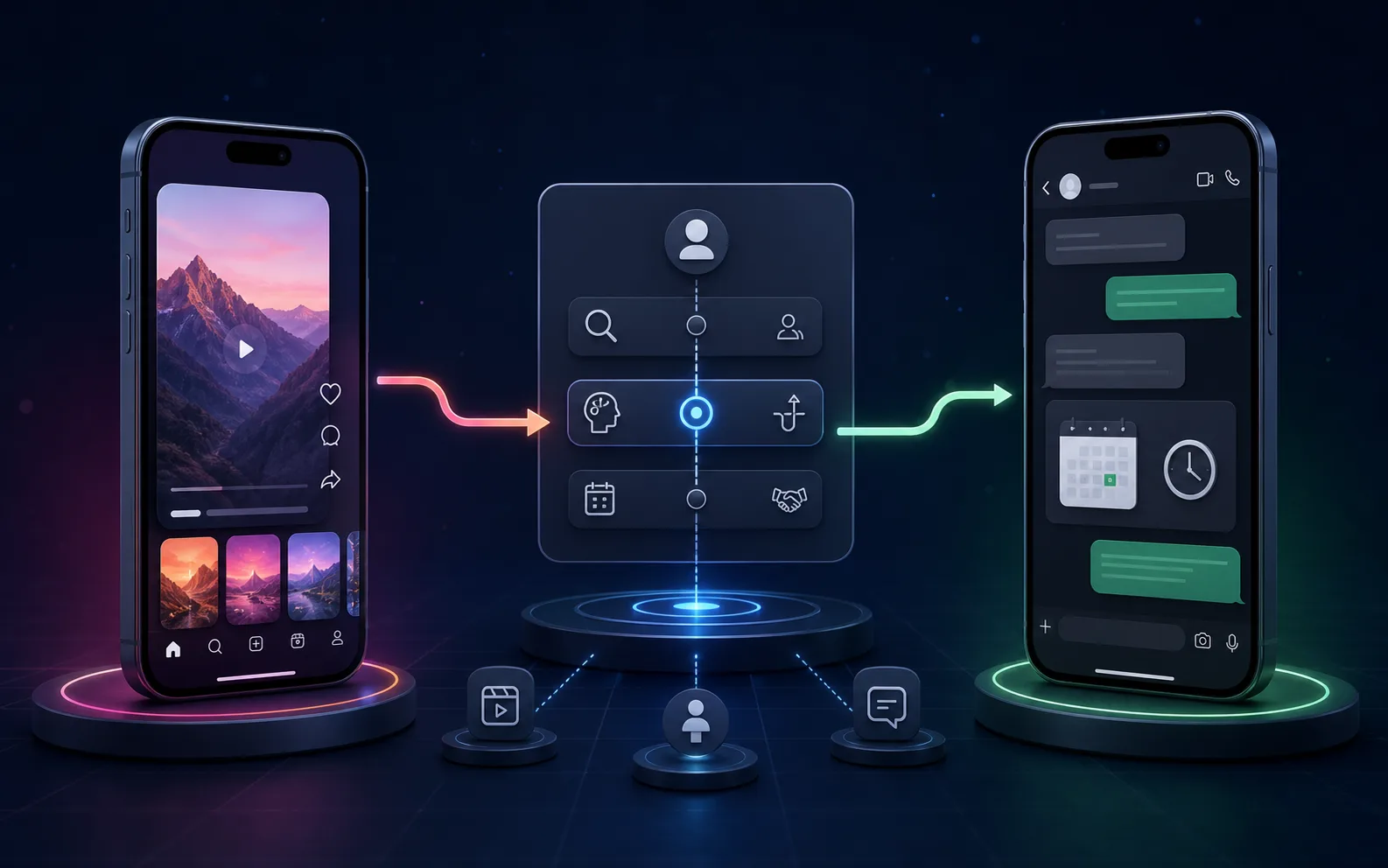
An online coach does not need to declare Instagram DMs or WhatsApp Business the winner.
The useful question is: which channel should own this part of the relationship?
Instagram is where many coaching relationships begin: someone sees a Reel, follows for a while, replies to a Story, or asks a low-pressure question. WhatsApp is a different kind of commitment. A person gives you a phone number, chooses a more direct conversation, and expects a useful reason for the move.
That difference matters more than generic claims about open rates or conversion rates. Those numbers vary by market, offer, audience, message quality, and whether the person actually expected the conversation.
For most online coaches, the cleanest model is not “move everyone to WhatsApp” or “keep everything in Instagram forever.” It is a channel design that matches the job:
| Job in the buyer journey | Usually the better starting channel | Why |
|---|---|---|
| Turn content attention into a first conversation | Instagram DMs | The person can reply without leaving the content environment where interest started |
| Answer a question and understand the lead's context | Usually Instagram DMs | The Story, Reel, ad, or comment that prompted the message remains close to the conversation |
| Offer a more direct, ongoing exchange the person requested | WhatsApp Business | The person has intentionally shared a number and chosen a one-to-one channel |
| Follow up after a WhatsApp conversation goes quiet | WhatsApp Business, with its policy rules | The 24-hour customer-service window and approved-template rules determine what is allowed |
| Book a call | The channel where the lead is engaged and the next step is clear | The important rule is qualification and a clear reason for the call, not the app logo |
| Support an active client | The channel the client selected and your privacy obligations permit | Continuity is useful, but convenience does not override consent or sensitive-data requirements |
The short version: use Instagram to reduce friction at discovery; use WhatsApp only when the person has chosen a direct relationship channel and you have a compliant reason to keep talking there.
If the job is ongoing public community context rather than a one-to-one conversation, there is a third Instagram surface to consider: Broadcast Channels for online coaches. That guide covers their public, opt-in role, feedback features, and how to move a specific person into a voluntary DM when individual context is needed.
Source check: This guide was reviewed against WhatsApp Business documentation available on August 24, 2026. Platform rules and product availability can change, so verify the policy and your local obligations before changing a live messaging workflow.

What is the practical difference between WhatsApp Business and Instagram DMs?
The practical difference is not simply “one is social and one is private.” It is how a conversation starts, what context comes with it, and what permission you have to continue it.
An Instagram DM often begins alongside public content. Someone can respond to the exact Story, Reel, or post that made them curious. That makes it useful for early, low-commitment questions such as “What does this include?” or “Would this work if I travel a lot?”
WhatsApp Business starts from a phone-number relationship. WhatsApp's Business Messaging Policy says a business may contact a person only when it has the person's mobile number and opt-in permission to send subsequent messages or calls. A business must also honor opt-outs.
That is why WhatsApp should not be treated as an escape hatch for Instagram follow-up. A person who followed you, commented on a post, or sent one Instagram DM has not automatically agreed to receive WhatsApp messages.
When should an online coach keep a lead in Instagram DMs?
Keep the conversation in Instagram when the lead is still discovering the offer or when the content context makes the conversation easier.
Instagram DMs are usually the cleaner choice when:
- someone replied to a Story and needs a simple first response
- someone came from a Reel, comment prompt, or Instagram ad and the entry context matters
- the person is comparing options or asking an early question
- you need to find out what they want before suggesting a call
- a change of channel would add friction without adding value
The mistake is rushing to collect a phone number because it feels like “capturing a lead.” That can make a casual social conversation feel like a form submission.
Instead, use the Instagram thread to understand the reason the person reached out. The DM sales pipeline is useful here: a new inquiry, an engaged conversation, a qualified lead, and a booked call are different stages. A channel switch does not replace stage clarity.
If your main issue is responding consistently, qualifying leads, or preventing good conversations from being forgotten inside Instagram, solve that operating problem first. A new channel cannot repair unclear lead routing, weak qualification, or a naked calendar link.
When is WhatsApp Business the better next step?
WhatsApp Business can be a good next step when the person wants a more direct exchange and you can name why moving helps them.
Examples include:
- a lead asks to continue on WhatsApp because that is their preferred channel
- you need to send a short voice note, document, or call preparation detail that the lead specifically requested
- a qualified lead wants a clear booking confirmation and has opted in to receive it there
- a paying client has chosen WhatsApp for an agreed support or check-in rhythm
- your audience is already accustomed to starting business conversations on WhatsApp
Meta's ads that click to WhatsApp exist precisely because a person can choose to open a WhatsApp chat directly from Facebook or Instagram. That is different from a business exporting Instagram usernames or numbers and messaging people later without a clear opt-in.
The channel move should have a stated benefit. For example:
“If you prefer, we can continue this on WhatsApp and I’ll send the short voice note that explains how the call works. I’ll only use that number for this conversation and any follow-up you choose to receive.”
That message tells the person what they are agreeing to. It also forces the business to decide what it will actually send.
What WhatsApp Business rules change your follow-up plan?
WhatsApp is useful because it is direct. It also has rules that should shape the system before anyone turns on automation.
For the WhatsApp Business Platform, the policy says:
- a business can initiate a conversation only with an approved message template
- a business can reply without a template within 24 hours of the user's last message
- outside that 24-hour customer-service window, only approved templates may be sent
- automation during the window needs a prompt, clear, direct path to human escalation
Those are not technical footnotes. They affect the follow-up promise you make to a lead.
If a person messages on Tuesday and goes quiet, a free-form “just checking in” reply may not be available on Friday through the Platform. The system needs either a compliant approved template, a different agreed-upon process, or no message at all. WhatsApp also says that sustained low-quality messaging, blocks, reports, or policy violations can lead it to limit or remove access to Business Services.
The safest practical rule is:
Write the opt-in, the reason for follow-up, the owner, and the next approved action before you collect WhatsApp numbers at scale.
Do not collect a number just because the spreadsheet has a column for it.
Instagram DMs vs WhatsApp Business: a decision matrix for coaches
Use this table to make the channel decision based on the work, not hype.
| Question | If the answer is mostly yes | Better default |
|---|---|---|
| Did the lead discover you through a specific Reel, Story, post, or Instagram ad? | Their original content context will help the conversation | Instagram DMs |
| Is the person still asking early questions or deciding whether to talk? | Moving channels adds a new ask before the next step is clear | Instagram DMs |
| Did the person specifically request WhatsApp or voluntarily agree to continue there? | There is clear permission and a stated reason to move | WhatsApp Business can be appropriate |
| Does the next exchange need an ongoing, direct relationship channel? | The client or lead prefers it and your workflow can support it | WhatsApp Business, with consent and policy controls |
| Are you planning a future follow-up outside the active conversation? | You can explain the message category, opt-in, and allowed sending method | WhatsApp Business only if those controls are in place |
| Is sensitive health information likely to be discussed? | Privacy, regulatory, and platform restrictions may apply | Use a channel and process your obligations permit; get professional advice when needed |
This is a decision framework, not a claim that every buyer behaves the same way. In some markets, WhatsApp may be the natural first channel. In others, Instagram is where almost every early conversation begins. Your system should follow the behavior of the people you actually serve.
How should a coach move a lead from Instagram to WhatsApp?
The best handoff is voluntary, specific, and recorded.
1. Earn the reason to switch
Do not ask for a number as your first move. First answer the lead's immediate question or ask one useful follow-up. Then name the benefit of moving.
Good reasons include a requested voice note, a booked-call confirmation, a requested document, or an agreed client-support channel. “It is easier for us” is not a lead benefit.
2. Ask for permission in plain language
Explain what will happen next and give the person a real choice.
If WhatsApp is easier, you can send your number and opt in to receive the booking details there.
I’ll use it for this conversation and the call details only. Prefer to stay here? That is completely fine too.
The exact wording needs to match what you will actually do. Do not promise “call details only” and later use the number for unrelated marketing.
3. Save the consent and channel preference
Record at least:
- the source of the lead
- that the person chose WhatsApp
- what category of follow-up they agreed to receive
- the date and the owner of the next action
- the last inbound WhatsApp message time when that window matters
This belongs with the rest of the lead record. The online coach CRM fields checklist explains why source, stage, consent context, and next action need to stay close to the live conversation.
4. Keep the original context with the new channel
The person should not have to explain their whole situation again because the business changed apps.
Transfer the source, goal, problem, questions already answered, and the agreed next step. If a call is booked, use a concise DM lead handoff brief rather than making the closer reconstruct the thread.
5. Do not build a hidden second funnel
If Instagram is the discovery lane and WhatsApp is the relationship lane, the stages should still mean the same thing. A qualified lead should not become “new” again just because their number was added.
The channel changed. The buyer journey did not.
What should not move to WhatsApp by default?
Not every conversation benefits from a channel switch.
Keep the lead in Instagram DMs when:
- they have not asked for a more direct channel
- the only reason to move is to increase your own access to them
- you cannot describe the follow-up they are opting into
- your business cannot reliably honor opt-outs, timing, and ownership
- the lead's question is already easy to answer in the existing thread
Be especially careful with coaching niches where leads may disclose health, medical, or other sensitive personal information. WhatsApp's policy says businesses must obtain required notices, permissions, and consents, and must not use WhatsApp for telemedicine or to send or request health information when applicable regulation prohibits distributing it through systems that do not meet heightened requirements. Your legal and privacy obligations depend on your business and location; this article is not legal advice.
A simple two-channel operating model
For a coach who gets attention on Instagram and wants to offer WhatsApp responsibly, start small:
- Keep content replies, first questions, and early qualification in Instagram DMs.
- Offer WhatsApp only when a lead asks for it or when you can name a specific value exchange.
- Capture opt-in, reason, source, and next action before the first business-initiated follow-up.
- Set an owner for the WhatsApp conversation and an escalation route for automated replies.
- Review a small sample weekly: did the move make the lead's experience clearer, or did it just create another inbox?
This protects a principle that matters across any messaging platform: more channels should create more clarity for the lead, not more work for them.
If Instagram is already producing real sales conversations but your team struggles to respond, qualify, follow up, and hand off context consistently, Intellicoach helps online coaches run that Instagram DM operating layer without turning the article's channel decision into another inbox problem.
Frequently asked questions
Should online coaches use WhatsApp Business or Instagram DMs?
Use the channel that fits the lead's current job. Instagram DMs are usually the simpler place to turn social-content attention into a first conversation. WhatsApp Business is often useful after a person explicitly chooses it for an ongoing, one-to-one exchange, provided the coach can meet WhatsApp's opt-in, message-window, privacy, and escalation requirements. Many coaches should use both with a deliberate handoff rather than force every lead into one inbox.
Can an online coach move an Instagram lead to WhatsApp?
Yes, but only when there is a clear reason and the person voluntarily provides their number and agrees to be contacted there. Explain what will happen next, such as receiving a voice note, a booking confirmation, or client support. Do not treat a social follow, comment, or Instagram DM as blanket permission to send future WhatsApp messages.
Does WhatsApp Business require opt-in?
WhatsApp's Business Messaging Policy says a business may contact someone only when it has their mobile number and opt-in permission to receive subsequent messages or calls. Businesses are responsible for using an opt-in method that complies with applicable law and for honoring opt-outs.
Can a coach send any WhatsApp follow-up message at any time?
No. On the WhatsApp Business Platform, a business may reply without a template within 24 hours of the user's last message. Outside that customer-service window, it may send only approved message templates. The policy also requires clear escalation paths when automation responds during the window.
Should coaching client check-ins happen on WhatsApp?
They can, when the client has chosen the channel and the communication is appropriate for the coach's privacy and compliance obligations. Do not use convenience as a reason to collect or request sensitive health information in a channel that does not meet the requirements that apply to the business.
Ready to Try Intellicoach?
Built for online coaches with real DM volume who want to automate follow-ups and qualification without losing their voice.